Tips
316 vs 304 Stainless Steel: A Machinist's Comparison — When to Choose One Over the Other
By Cut316 Shop Team · 5/21/2026 · 11 min read
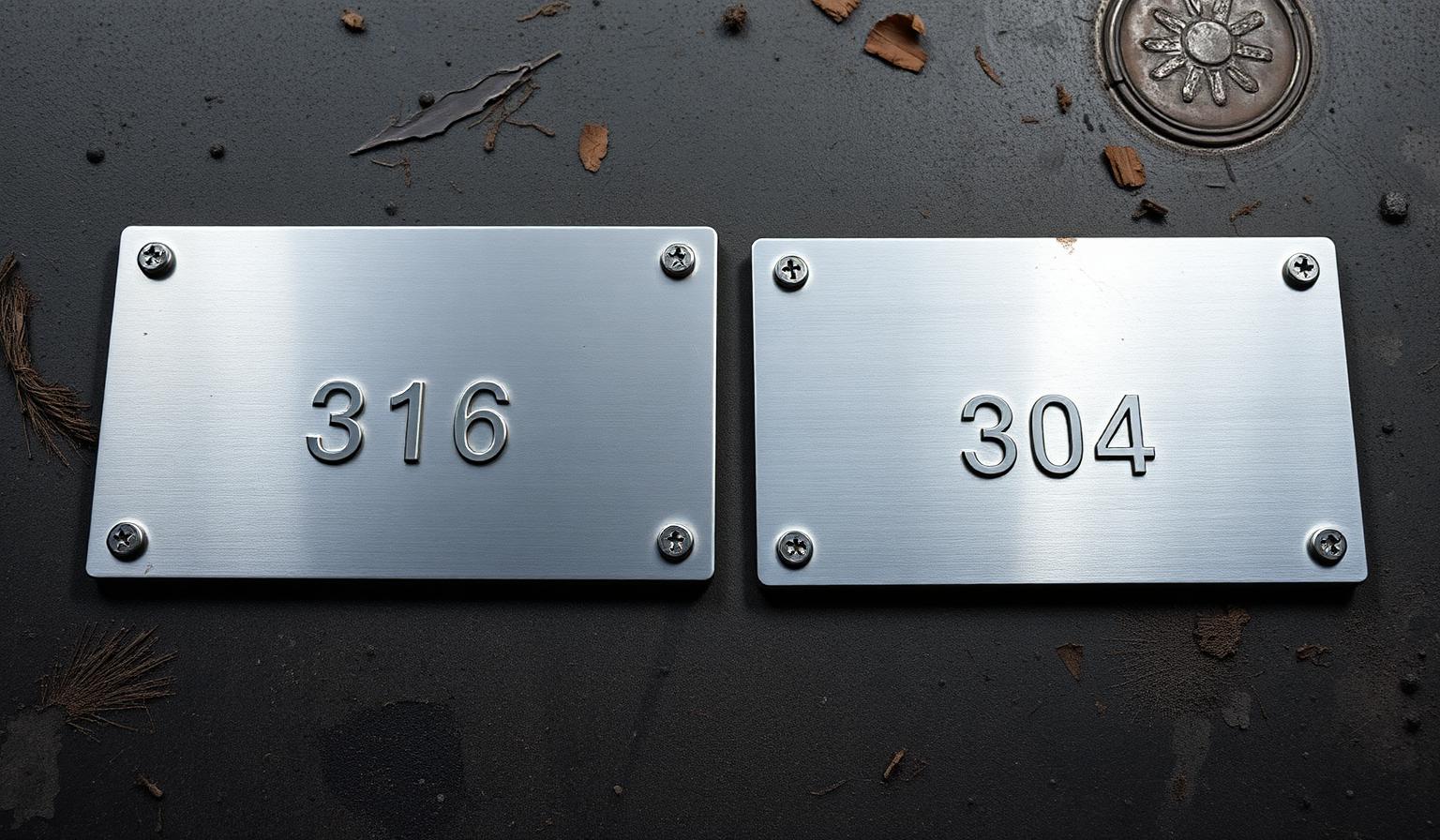
316 vs 304 Stainless Steel: A Machinist's Comparison — When to Choose One Over the Other
This question lands in my inbox at least twice a week. "Can I use 304 instead of 316?" or "The drawing says 316 but 304 is cheaper — does it matter?" Sometimes the answer is yes, sometimes the answer is absolutely not, and a surprising amount of the time the person asking doesn't fully understand what's different about the two alloys.
I'm going to settle this from the perspective of someone who machines 316 for a living and has spent a lot of time working with 304 as well. Not from a spec sheet — from a shop floor.
The Quick Answer Nobody Actually Uses
If cost is the only constraint and corrosion resistance is not critical: 304. If the part will see chlorides, salt water, acids, or aggressive cleaning chemicals: 316. If the part is medical, implantable, or food-contact in chlorinated environments: 316. If someone else specified 316 on the drawing and you want to save money by substituting 304: don't, without written engineering approval.
That's the 30-second version. Here's the full version.
Composition: What's Actually Different
Both 316 and 304 are austenitic stainless steels from the 300 series. They share the same basic structure — face-centered cubic (FCC) austenite — and both contain chromium for corrosion resistance and nickel for stability of the austenite phase.
Side-by-Side Composition
| Element | 304 / 304L | 316 / 316L |
|---|---|---|
| Chromium (Cr) | 18–20% | 16–18% |
| Nickel (Ni) | 8–10.5% | 10–14% |
| Molybdenum (Mo) | 0% | 2–3% |
| Carbon (C) — standard | ≤ 0.08% | ≤ 0.08% |
| Carbon (C) — L grade | ≤ 0.03% | ≤ 0.03% |
| Manganese (Mn) | ≤ 2.0% | ≤ 2.0% |
| Silicon (Si) | ≤ 1.0% | ≤ 1.0% |
The difference is essentially two things: 316 has 2–3% molybdenum that 304 doesn't, and 316 has higher nickel content (10–14% vs. 8–10.5% in 304).
Molybdenum is the whole ballgame. That 2–3% Mo addition is what earns 316 its dramatically improved chloride resistance. Molybdenum stabilizes the passive chromium oxide film against attack by chloride ions. Without it (304), chlorides can penetrate the passive film and initiate pitting.
The higher nickel in 316 also contributes to austenite stability and slightly improves toughness, but molybdenum is the functional differentiator.
Corrosion Resistance: The Real-World Difference
This is why you're asking the question in the first place, so let's be precise.
Pitting Resistance Equivalent (PRE)
Metallurgists use the Pitting Resistance Equivalent Number (PRE) as a numerical measure of pitting corrosion resistance. The standard formula is:
PRE = %Cr + 3.3×%Mo + 16×%N
For typical 304: PRE ≈ 18–20 For typical 316: PRE ≈ 24–28
That's a meaningful difference. 316 is approximately 30–40% more resistant to pitting initiation than 304 in chloride environments.
In practical terms:
304 is appropriate for:
- Indoor architectural applications
- Food processing equipment in non-chlorinated environments
- Kitchen equipment (non-aggressive cleaning)
- Chemical service with dilute non-halide acids
- Atmospheric exposure away from coastal environments
- General fabrication where corrosion exposure is limited
316 is required for:
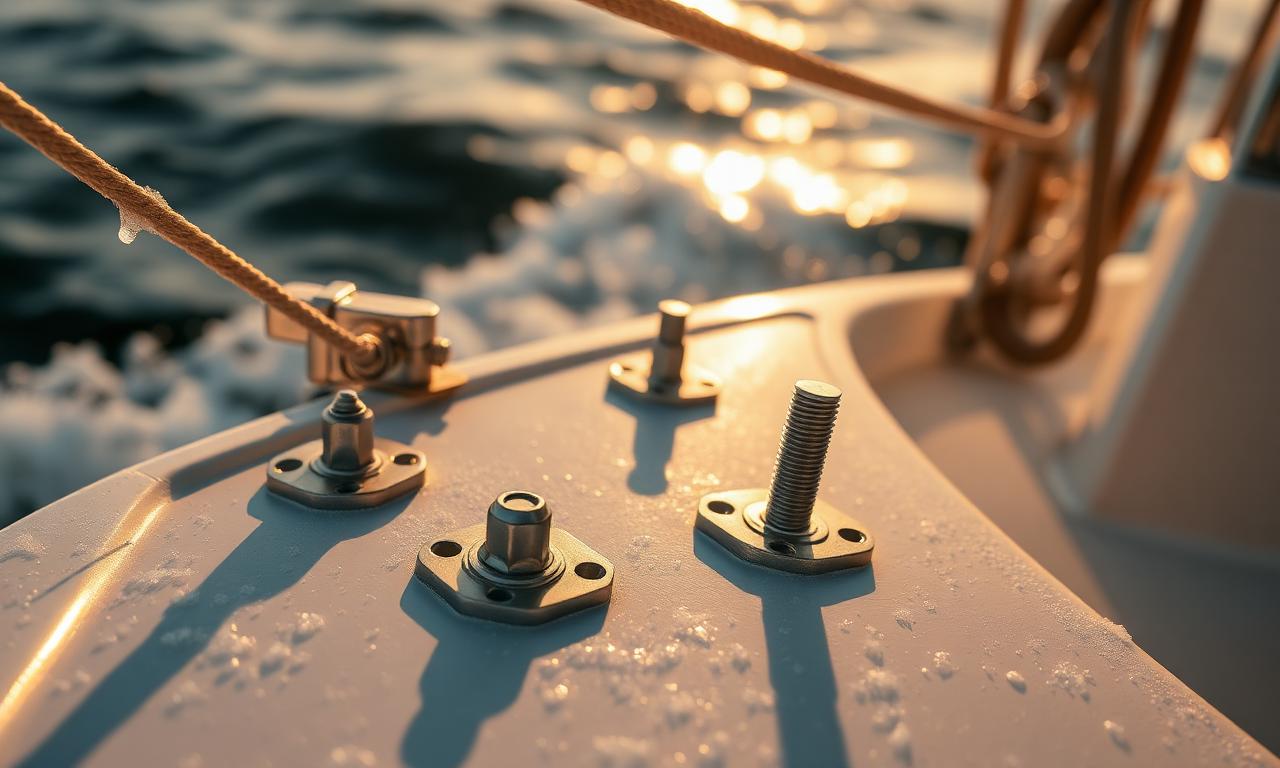
- Any marine or coastal environment
- Salt spray or road salt exposure
- Chloride-containing process streams
- Chlorinated water systems
- Pharmaceutical and medical applications (chloride contamination risk)
- Food processing with chlorinated cleaning agents (common in USDA-inspected facilities)
- Chemical processing with halides
- Brackish water or seawater immersion
The coastal architecture failure: This is a real scenario I've seen. Architect specifies 304 for exterior coastal building hardware to save money. The building is within two miles of the ocean. Within 18 months, the 304 hardware has reddish-brown staining from surface pitting. The 316 hardware on the neighboring building? Fine. Corrosion failures in the field are almost always the result of a wrong-grade specification, not a material defect.
Crevice Corrosion
Both grades are susceptible to crevice corrosion — the type that occurs in tight gaps where oxygen is depleted and chloride concentrates. 316 is more resistant but not immune. In aggressive environments, both grades may require design modifications (gasketed joints instead of crevices, drainage, etc.).
Stress Corrosion Cracking (SCC)
Both 304 and 316 are susceptible to chloride-induced SCC at temperatures above approximately 140°F (60°C). 316 has marginally better resistance but not dramatically so. In applications with sustained tensile stress and chloride exposure at elevated temperatures, higher grades (duplex, 904L, 6Mo alloys) should be considered regardless of which 300-series you're comparing.
Machinability: The Shop Floor Reality
Here's the comparison I've made thousands of times in person, and what I tell people who ask which is "easier" to machine.
Machinability Rating
Both 304 and 316 are rated around 45–50% machinability relative to AISI B1112 free-machining steel (100% baseline). In practical terms, they're close. AISI machinability ratings don't tell the whole story.
The real-world comparison:
316 machines slightly more slowly than 304 in most operations. The higher nickel content and molybdenum create a slightly tougher, more gummy chip. In practical terms, I run 316 at about 5–10% lower SFM than 304 at equivalent depth-of-cut and tooling. For most shops, this is not a meaningful difference.
Work hardening: Both grades work-harden aggressively. 316 is marginally worse. The same rules apply to both: sharp tools, adequate chip load, never let the tool dwell. The penalties for violating these rules are similar with both grades.
Chip character: 316 produces chips that are slightly longer and more stringy than 304. Same control strategies — proper chipbreaker geometry, correct feed rate, adequate coolant.
Surface finish: Both can be machined to excellent surface finishes with appropriate tooling. 316 requires slightly sharper tools to achieve the same Ra because of the higher ductility. The difference is meaningful at the extremes (very high polish work) but negligible for normal machining.
Tool life: Expect approximately 5–15% shorter tool life on 316 versus 304 at equivalent parameters. Not enough to drive a tooling strategy decision — but something to note when quoting.
Bottom line for the shop: If your shop machines 304 successfully, you can machine 316 with the same tooling and roughly the same parameters, adjusted down 5–10% on SFM. The techniques are identical. The fundamentals are identical. 316 is not a fundamentally different machining challenge from 304.
Where the Difference Shows Up
Drilling: 316 produces slightly more problematic chips in drilling than 304 — they're longer, stickier, and more prone to packing in flutes. Peck cycles that work in 304 may need to be shortened slightly in 316.
Tapping: Both grades gall. 316 galls slightly worse. The same tapping oil, same tap geometry, same approach — but in 316 you might need to replace taps 10–20% sooner.
Welding: Both grades are weldable. 316 is more weld-crack-resistant in chloride service because the molybdenum passivates the heat-affected zone more completely. 304 sensitization in the HAZ (chromium carbide precipitation at grain boundaries on standard grade) depletes chrome from the grain boundary region — this is why 304L (and 316L) were developed. For any welded part going into corrosive service, always specify the L-grade.
Mechanical Properties: What the Numbers Say
Both grades have nearly identical mechanical properties in the annealed condition.
| Property | 304 Annealed | 316 Annealed |
|---|---|---|
| Tensile Strength (UTS) | 73,200 psi (505 MPa) | 75,000 psi (515 MPa) |
| Yield Strength (0.2% offset) | 31,200 psi (215 MPa) | 30,500 psi (210 MPa) |
| Elongation (2") | 40% | 40% |
| Hardness (Brinell) | ~201 HB max | ~217 HB max |
| Density | 0.290 lb/in³ | 0.290 lb/in³ |
| Modulus of Elasticity | 28 × 10⁶ psi | 28 × 10⁶ psi |
For machining and structural design purposes, these are essentially identical. If someone is choosing between 304 and 316 based on mechanical properties for a structural application, they're making the wrong decision criterion — corrosion environment is what should drive the selection.
Cost Difference
316 costs more than 304. The precise premium varies with nickel and molybdenum market pricing, but 316 bar stock and sheet typically runs 20–40% more than equivalent 304. Molybdenum pricing is the main variable.
In a well-run shop, 316's premium over 304 is a cost of materials — it gets built into the quote. Where shops get in trouble is substituting 304 for 316 on a job that specifies 316, either because they're out of 316 or they're trying to improve margins. This is a real quality and liability issue. Don't do it without engineering documentation.
The cost premium of 316 over 304 is almost never the deciding factor in material specification for the applications where 316 is needed. Replacing a pump housing or a marine bracket because it corroded through is dramatically more expensive than the upcharge for 316 at the outset.
Application Guide: Which Grade for Which Job
Use 304 / 304L When:
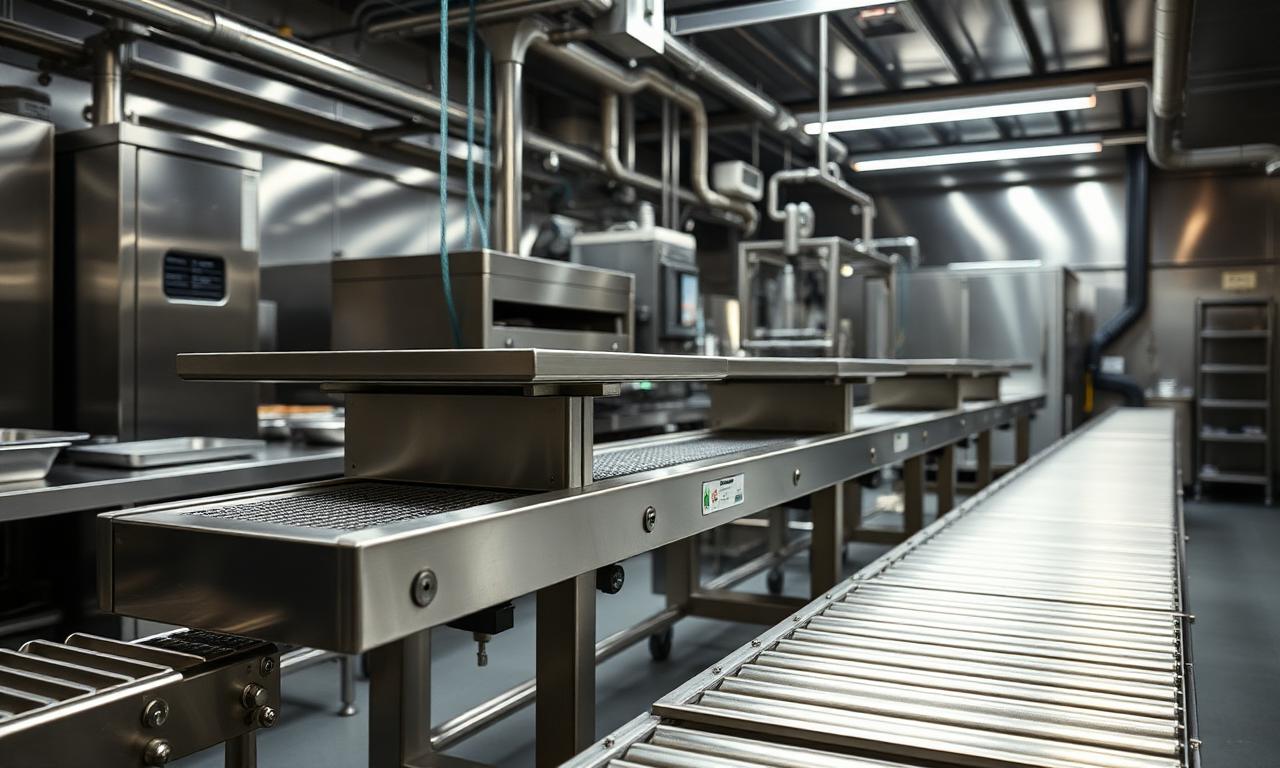
Food equipment (dry or non-chlorinated): Conveyors, hoppers, structural frames in bakeries, dry ingredient handling. USDA accepts 304 for most food contact surfaces not using chlorinated CIP cleaning.
Architectural and decorative: Indoor railings, fixtures, trim, countertops, elevator panels. Interior use where chloride exposure is not present.
General industrial fabrication: Frames, brackets, supports, guards in non-aggressive environments. When strength and formability are the requirements and corrosion exposure is atmospheric.
Tanks and vessels (non-halide service): Water tanks, atmospheric storage, mild acid service.
Brewing and dairy equipment (with proper cleaning protocols): Many operations use 304 successfully with proper acid-based CIP rather than chlorinated cleaners.
Use 316 / 316L When:
Marine and coastal applications: Boat hardware, dock fittings, coastal architectural elements, anything within 5–10 miles of saltwater or exposed to spray.
Chemical processing: Anywhere halide compounds are present — chlorine, hydrochloric acid, chloride salts. Pharmaceutical intermediates, chlor-alkali processing.
Medical devices: FDA guidance and most medical device standards require 316L for implantable and body-contact devices due to chloride resistance in physiological environments. ISO 5832-1 covers 316L specifically for surgical implants.
Food processing with chlorinated CIP: Any operation that sanitizes with chlorine or sodium hypochlorite. This includes most USDA-inspected meat and poultry facilities, dairy operations, and many beverage plants. The cleaning chemistry requires 316.
Pharmaceuticals / biotech: Vessels, piping, fittings in drug manufacturing. GMP environments almost universally specify 316L. The smoother surface achievable on 316L and its chloride resistance are both factors.
Pulp and paper: Bleaching operations, white water systems, anywhere chlorine dioxide or hypochlorite is present.
Wastewater and water treatment: Chlorinated water systems, chlorination equipment, effluent handling.
Oil and gas (offshore): Seawater-cooled equipment, subsea components, anything in salt spray environment.
Brewery and winery production equipment: Direct product-contact equipment in facilities using any chlorinated sanitizers — which is most of them.
Welding Comparison: 304 vs 316
Both 304 and 316 are readily weldable using TIG, MIG, plasma arc, and resistance welding processes. The important distinctions:
Filler metal selection:
- 304 → ER308L filler
- 316 → ER316L filler
- Welding 304 to 316 → ER316L filler (always use the more corrosion-resistant filler when joining dissimilar grades)
Never use 308 filler on 316 in service. The 308 filler lacks molybdenum and the weld joint will corrode preferentially in chloride environments — even if the base metal is 316.
L-grade requirement for welded parts: Always use 304L and 316L (low-carbon) for welded components going into corrosive service. Standard 304 and 316 can sensitize in the HAZ during welding — carbide precipitation depletes chromium from grain boundaries, creating a path for intergranular corrosion. The L-grades have carbon controlled to ≤ 0.03%, which suppresses sensitization at normal welding heat input.
Post-weld treatment: Both grades benefit from passivation after welding. Citric acid passivation (ASTM A967) or nitric acid passivation removes iron contamination and restores the passive chromium oxide film. Pickling paste removes weld discoloration and the underlying heat-tint oxide. In 316 welded components for chloride service, this step is not optional — weld scale is non-passivated material.
Purge gas: For stainless TIG welding, purge the back side of the weld with argon or nitrogen to prevent sugaring (internal oxidation of the root). Sugaring is especially problematic in 316 tubing for pharmaceutical and food applications where internal surface integrity is required.
When the Grade Substitution Question Actually Matters
This happens constantly in job shops. Customer sends a drawing that specifies 316. The shop is out of 316. The shop has 304 in the rack. What do you do?
The correct answer: Call the customer before you cut anything.
The customer specified 316 for a reason — or their customer did, or the environment requires it, or a regulatory body mandated it. Substituting 304 for 316 without written approval is a quality system violation in most ISO 9001 environments and can expose your shop to liability if the part fails in service.
I've seen this go wrong. A job shop substituted 304 for 316 on a batch of brackets that went into a coastal outdoor application. Eighteen months later, the brackets were pitting and staining. The shop ate the replacement cost and damaged the relationship.
The cost difference between 316 and 304 is rarely large enough to justify the risk of undisclosed substitution. Don't do it.
Summary: The Decision Matrix
| Factor | 304 | 316 | Notes |
|---|---|---|---|
| Chloride resistance | Good | Excellent | This is the key differentiator |
| Pitting resistance (PRE) | 18–20 | 24–28 | 316 ~30–40% better |
| Machinability | Very Similar | Very Similar | 316 ~5–10% slower |
| Work hardening | Aggressive | Slightly more aggressive | Same mitigation strategies |
| Tensile strength | 73,200 psi | 75,000 psi | Essentially identical |
| Weldability | Excellent | Excellent | Use L-grade for welded parts in service |
| Material cost | Lower | 20–40% premium | Varies with Mo market price |
| Marine service | Not recommended | Yes | 316 standard for marine |
| Medical / implant | Not for implants | Yes (316L) | ISO 5832-1 |
| Food processing (CIP) | Depends on chemistry | Yes | 316 for chlorinated CIP |
| General fabrication (indoor) | Yes | Overkill | 304 is fine indoors |
The Bottom Line
304 and 316 are often treated as interchangeable by people who haven't thought carefully about the application. They're not — not in corrosive environments. From a machining standpoint, they're close enough that everything you know about cutting 304 transfers directly to 316 with minor parameter adjustments.
Specify 304 where the environment doesn't demand more. Specify 316 where chlorides, aggressive cleaning agents, or marine exposure are in play. Never substitute without approval. And when in doubt, 316 is the safe choice — the cost premium is small compared to the liability and rework cost of a wrong-grade failure in service.
For machining both grades, see:
- Condensed 316 Cutting Guide — Speeds, Feeds & Blade Picks
- Ultimate Guide to Cutting 316 Stainless Steel — All Methods
- Best Carbide Tools for 316 SS — 2026 Buyer's Guide
- Speeds & Feeds Calculator
📥 Free Download: 316 vs 304 Quick-Reference Card + Full 316 Cutting Guide PDF The full comparison table plus every cutting parameter you need for 316 — in a print-ready format for the shop wall. Enter your email below.
[Email signup form — lead magnet CTA]
Affiliate · Tested in shop
Shop Our Top Tool Picks for 316 Stainless →
Bandsaw blades, carbide end mills, cobalt drills, tapping fluids and coolants that actually survive 316.
See recommended tools