Tips
The Ultimate Guide to Cutting 316 Stainless Steel
By Cut316 Shop Team · 5/21/2026 · 14 min read
The Ultimate Guide to Cutting 316 Stainless Steel
If you've been around a shop long enough, you've heard someone say "stainless is just steel, right?" That person usually learns their lesson by lunch. 316 stainless steel is one of the most corrosion-resistant alloys you'll work with regularly, and it comes with a machining personality that punishes carelessness and rewards preparation.
I've been cutting 316 exclusively for 25-plus years. In that time I've used every method in this guide, made most of the mistakes, and developed a pretty clear sense of what works when. This isn't theory — it's what actually happens in a production shop.
Let's go method by method.
Understanding 316 Before You Pick a Cutting Method
Every cutting method decision starts with the same set of questions about the material itself.
316 stainless is an austenitic chromium-nickel steel with 2–3% molybdenum added for corrosion resistance. It's the molybdenum that makes it dramatically more resistant to chloride pitting than 304 — which is why it shows up in marine hardware, chemical processing equipment, food-grade machinery, and medical implants.
The machining characteristics that affect every cutting method are the same ones we talk about in our Condensed 316 Cutting Guide:
Work hardening is the big one. 316 strain-hardens at the surface when cutting forces are insufficient to shear the material cleanly. Any method that generates rubbing, friction, or heat without proper chip formation risks creating a harder surface for the next cut.
Gummy chip formation means the material sticks to tooling. Stringy, built-up chips are 316's signature problem across almost every cutting method.
Low thermal conductivity means heat stays where it's generated — at the tool tip or cut zone — rather than dissipating into the workpiece.
316L (low-carbon variant) behaves nearly identically to standard 316 in cutting. Slightly more gummy. Same methods, essentially the same parameters.
Now — which method do you need?
Method 1: Bandsaw Cutting
Best for: Cutting bar stock, billet, tubing, and structural sections to length. High-volume cutoff work.
Not ideal for: Contoured cuts, tight radii, anything requiring a precision finish at the sawn surface.
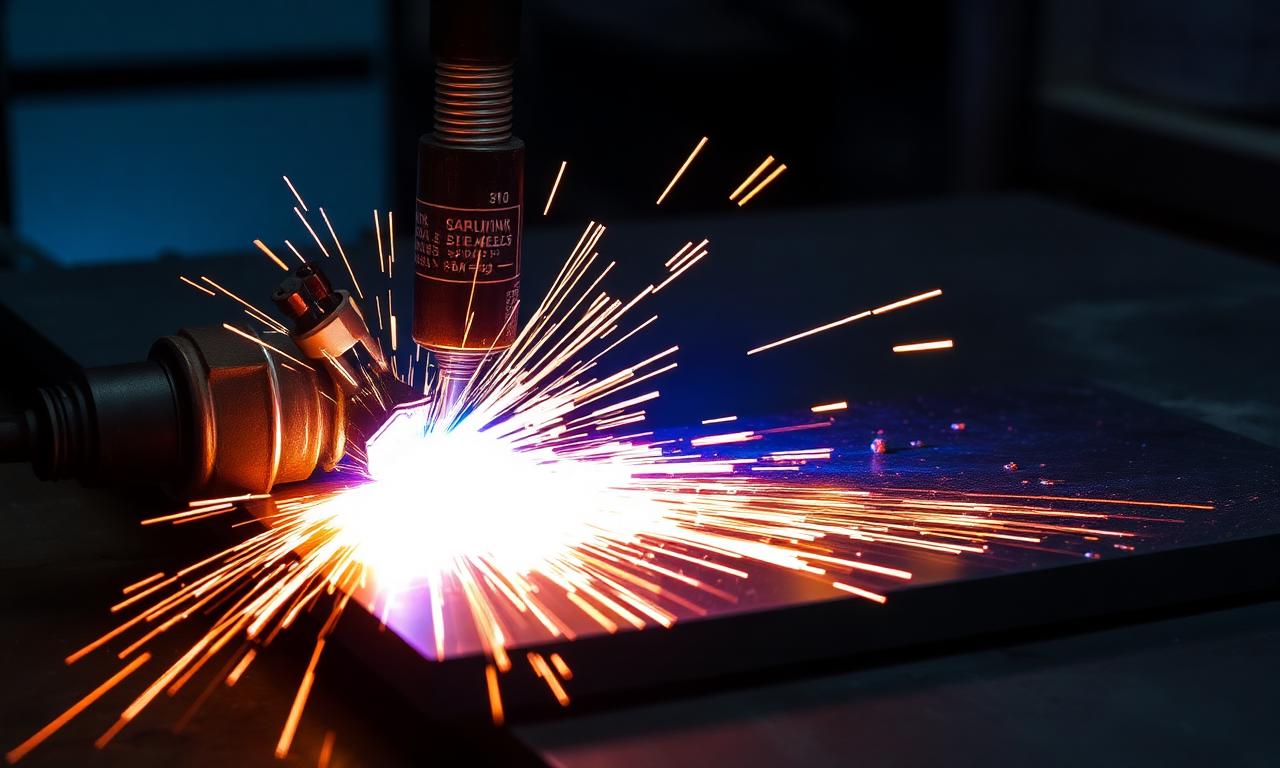
The bandsaw is the workhouse of most 316 shops. It's how raw material becomes manageable blanks before any machining operation. I run a Kalamazoo horizontal/vertical combo and a DoAll vertical for contour work — both have been cutting nothing but 316 for years.
What Works
Blade specification matters more than machine brand. Get this right first.
M42 bi-metal blades — 8% cobalt content in the tooth edge — are the industry standard for 316 stainless. The cobalt adds hot hardness; the high-speed steel backing handles flex and impact. Carbide-tipped blades outperform M42 on long production runs but cost 3–5× more.
TPI (teeth per inch) selection: you want 3–6 teeth in the cut at any moment. Too few and you get gullet loading and tooth strippage. Too many and chips pack, heat builds, and blade life collapses.
For 2" round bar: 8–10 TPI is ideal. For 1" tube: 14–18 TPI. For 6" solid bar: 4–6 TPI.
Blade speed: 70–110 SFPM for most bar stock. This is significantly slower than carbon steel. I've seen new guys set 316 up at 250 SFPM because "that's what the chart says for steel" — the blade is scrap in five minutes.
Cutting fluid: Non-negotiable. Sulfurized oil or water-soluble coolant. Flood the cut or at minimum brush oil onto the blade continuously. Dry cutting 316 on a bandsaw is how you destroy a $60 blade in one cut.
Break-in procedure: New blade, first 50–100 square inches at 50% of normal feed. The set on new teeth needs to be worked in gradually. Skip this step and micro-chipping starts immediately.
Common Bandsaw Mistakes
- Running too fast. Most common problem. Slow down.
- Skipping break-in. Second most common.
- Using the wrong TPI. Undershooting or overshooting teeth-in-cut ruins blades.
- No coolant. Fatal to blade life.
- Not clamping rigidly. Vibration causes the blade to walk and the cut to taper. Clamp within 2" of the cut if possible.
[Recommended M42 Bi-Metal Bandsaw Blade for Stainless — Amazon Affiliate Link]
Method 2: CNC Milling
Best for: Precision contour work, pockets, profiles, slots, complex 3D geometry.
Not ideal for: Cutoff work, rough stock separation, large-format sheet cutting.
CNC milling is where most of the real money is made on 316 in my shop. Also where the most expensive mistakes happen.
The core principle is the same as with every 316 operation: the tool must cut, not rub. Any dwell, any hesitation, any tool that's dulled past the point of cutting cleanly — and you're work-hardening the surface for the next pass.
Tooling
Solid carbide end mills with AlTiN or AlCrN coatings are the standard. AlCrN has better oxidation resistance at elevated temperatures, which matters on 316 where heat concentration at the tool is a constant issue. See our full Best Carbide Tools for 316 SS guide for specific grade and brand recommendations.
4-flute for general work. 5–7 flute for finishing passes.
General Parameters
SFM range: 200–250 for coated carbide end mills. Feed per tooth: 0.001–0.005" depending on diameter. Axial depth of cut: 0.5–1×D for roughing with appropriate radial stepover.
High-efficiency machining (HEM/trochoidal) toolpaths dramatically outperform conventional roughing on 316. The light radial engagement (15–25% stepover) combined with higher axial depth keeps chip load consistent, prevents rubbing, and manages heat far better than a wide, shallow pass.
Coolant: Flood, minimum 150 PSI. Through-spindle if your machine has it — this alone can add 30–40% tool life on 316.
Method 3: CNC Turning (Lathe Work)
Best for: Round bar, shafts, rings, precision cylindrical components.
Not ideal for: Non-round geometry (obviously), sheet goods.
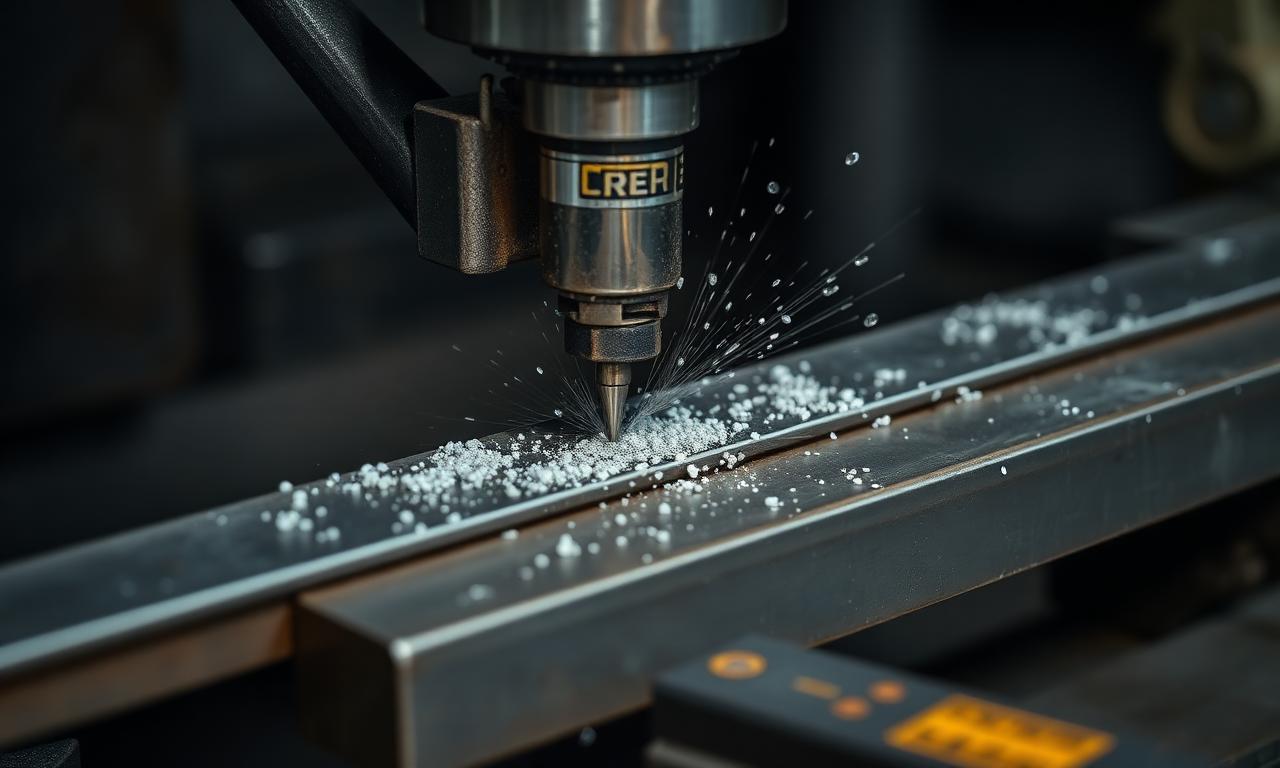
Turning 316 is manageable with the right insert geometry. Positive rake, sharp honed edge (T-land ≤ 0.002"), chipbreaker designed for stainless austenitic alloys.
Roughing: 200–300 SFM, 0.010–0.016" IPR feed, 0.080–0.150" DOC. Finishing: 350–500 SFM, 0.004–0.007" IPR, 0.010–0.025" DOC.
The biggest turning mistake I see: using an insert meant for carbon steel. The geometry is wrong for 316 — heavier edge prep, wrong chipbreaker, inadequate coating. You can make it work for a while, but tool life is terrible and surface finish suffers.
High-pressure coolant at the insert face transforms 316 turning. We added HPC to our Mazak several years ago and immediately bumped our finishing SFM from about 280 to 380. Heat management was the entire difference.
Method 4: Fiber Laser Cutting
Best for: Flat sheet and plate up to 3/4"–1" (thicker with high-power machines), production runs, intricate profiles.
Not ideal for: Round tube without a rotary attachment, parts where edge corrosion resistance is critical without post-processing.
Fiber laser has largely displaced CO2 in stainless sheet work over the past decade. Faster setup, faster cut speeds on thin material, lower operating cost. A modern 6–12 kW fiber laser is a fundamentally different machine from what the industry was running ten years ago.
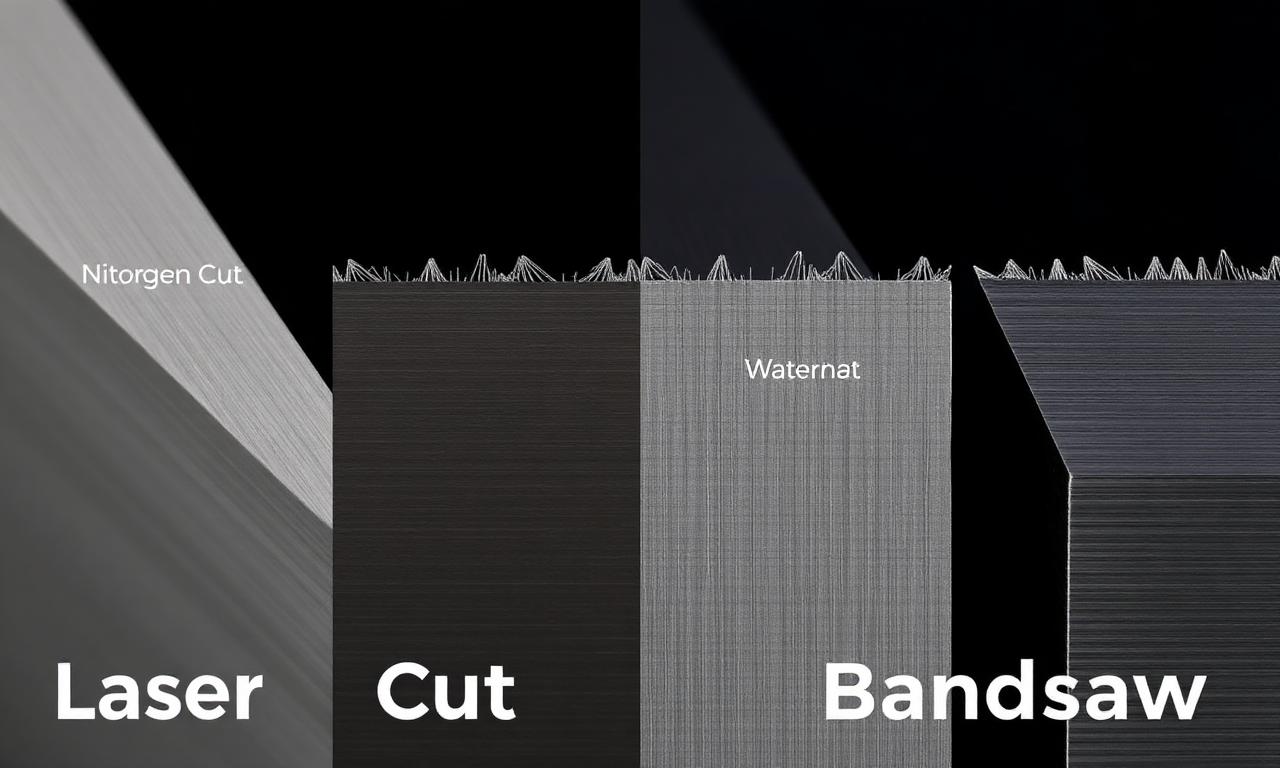
The Nitrogen Assist Rule
I will say this once and it applies absolutely: use nitrogen assist gas on 316 stainless, always.
Oxygen assist is faster and cheaper but oxidizes the cut edge. That brown-to-blue heat-tinted edge isn't just cosmetic — it's a chrome-depleted zone with compromised corrosion resistance. On a part that's specified 316 because of corrosion resistance, an oxygen-cut edge is a liability. Nitrogen produces a bright, oxide-free, weld-ready edge at higher gas pressure.
Laser Parameters (Fiber, Nitrogen Assist)
| Thickness | Recommended Power | Approximate Speed | N₂ Pressure |
|---|---|---|---|
| 16 gauge (0.060") | 2–3 kW | 400–600 IPM | 150–200 PSI |
| 11 gauge (0.120") | 3–4 kW | 200–350 IPM | 150–200 PSI |
| 1/4" | 4–6 kW | 80–140 IPM | 200–250 PSI |
| 3/8" | 6–8 kW | 40–70 IPM | 200–250 PSI |
| 1/2" | 8–12 kW | 20–40 IPM | 220–280 PSI |
| 3/4" | 10–15 kW | 10–20 IPM | 250–300 PSI |
These are ballpark numbers — every machine, lens condition, nozzle diameter, and material surface finish requires dialing in. Consider them starting points.
316 vs. 304 on fiber laser: 316 runs about 5–10% slower than 304 at the same thickness and power. Not a dramatic difference but worth noting when you're quoting jobs or setting up a new nest.
Laser Cutting Pros and Cons for 316
Pros:
- Excellent part-to-part repeatability
- Minimal setup time for sheet goods
- Very tight tolerances possible (±0.003"–0.005" on quality machines)
- No tooling cost per cut
- Handles intricate profiles easily
Cons:
- Heat-affected zone exists, even if small with nitrogen assist
- Edge hardness slightly elevated from thermal effects
- Not suitable for thick plate without high-power machines
- Kerf width (typically 0.010"–0.020") must be accounted for in nesting
Method 5: Waterjet Cutting
Best for: Any thickness where zero heat-affected zone is required. Thick plate. Parts where edge corrosion resistance cannot be compromised. Complex profiles in thick material.
Not ideal for: Very thin gauge (taper issues), high-volume thin sheet (laser is faster and cheaper), tight inside corners at depth.
Waterjet is my go-to recommendation any time someone has a part where the cut edge is going to be in direct corrosive service without machining cleanup. Medical device brackets. Chemical pump housings. Submerged marine hardware. No heat, no HAZ, no metallurgical change at the edge.
How Waterjet Works on 316
A 55,000–90,000 PSI water stream mixed with garnet abrasive erodes the material. The material removal is mechanical, not thermal. The 316 at the cut edge is chemically and metallurgically identical to the base material.
The trade-off is speed and taper. Waterjet is slower than laser on thin material and produces a small taper angle (typically 1–2°) that varies with cut speed. Quality 5 (slowest, best finish) produces minimal taper. Quality 3 (production speed) has more.
Waterjet Parameters for 316
| Thickness | Pressure | Abrasive (lb/hr) | Q3 Speed (IPM) | Q5 Speed (IPM) |
|---|---|---|---|---|
| 1/4" | 55,000–60,000 PSI | 0.8–1.0 | 20–30 | 8–12 |
| 1/2" | 55,000–60,000 PSI | 1.0–1.2 | 10–15 | 4–7 |
| 1" | 55,000–60,000 PSI | 1.2–1.5 | 4–7 | 1.5–3 |
| 2" | 60,000–90,000 PSI | 1.5–2.0 | 1.5–3 | 0.5–1.5 |
Post-cut: garnet abrasive particles can embed in the cut surface. For parts going into food, pharmaceutical, or high-purity applications, a passivation step per ASTM A967 or AMS 2700 after waterjet cutting is standard practice.
Waterjet Pros and Cons for 316
Pros:
- Zero heat-affected zone — the single biggest advantage
- No work hardening at cut edge
- No metallurgical changes
- Cuts any thickness with enough abrasive and time
- Same machine handles 316, titanium, aluminum, composites
Cons:
- Slower than laser on thin material
- Higher per-part cost on thin sheet
- Taper on thick sections at production speeds
- Garnet embedment requires passivation for some applications
- Not suitable for sealed/hollow parts (water ingress)
Method 6: Plasma Cutting
Best for: Structural work, rough cutoff of thick plate, situations where speed matters more than edge quality.
Not ideal for: Any application where cut-edge corrosion resistance matters. Precision parts. Thin gauge.
I'll be blunt: plasma is not the right tool for most precision 316 work. It's fast, it's cheap, and it creates a heat-affected zone that compromises the corrosion resistance that is the entire point of specifying 316. I use plasma in my shop for one purpose — quickly parting off large sections of plate that will be machined all over anyway.
When Plasma Is Acceptable on 316
- When the cut edge will be fully machined away (minimum 1/16"–1/8" material removal)
- Structural applications where corrosion resistance at the cut edge is not a design requirement
- Rough blanking before waterjet or laser finishing
Plasma Parameters
| Thickness | Amperage | Speed (IPM) | Recommended Gas |
|---|---|---|---|
| 16 ga | 30–40A | 60–100 | Compressed air or N₂ |
| 1/4" | 50–70A | 30–50 | Air, N₂, or N₂/O₂ |
| 1/2" | 80–100A | 15–25 | N₂/O₂ or F5 |
| 3/4" | 100–130A | 8–15 | F5 or H35 |
| 1" | 130–200A | 5–10 | H35 |
F5 = 95% nitrogen / 5% hydrogen mixture. H35 = 65% argon / 35% hydrogen. Both produce better edge quality and less dross than straight air on stainless, but the HAZ is still present regardless of gas selection.
Post-plasma requirement: Any 316 plasma-cut part going into corrosive service must have the HAZ removed mechanically (grinding, machining) or chemically (pickling paste) before service. This is not optional.
Plasma Pros and Cons for 316
Pros:
- Fast
- Low equipment and consumable cost
- Handles very thick plate
- Portable for field work
Cons:
- Significant HAZ
- Compromised corrosion resistance at cut edge
- Dross and spatter on bottom face
- Requires post-cut cleanup for any precision or corrosion-critical application
- Not suitable for thin gauge (burn-through risk)
Method 7: Angle Grinder / Abrasive Cutoff Wheel
Best for: Field work, quick cuts in tight spaces, removing tack welds, emergency situations.
Not ideal for: Anything that could be done in the shop with better tooling.
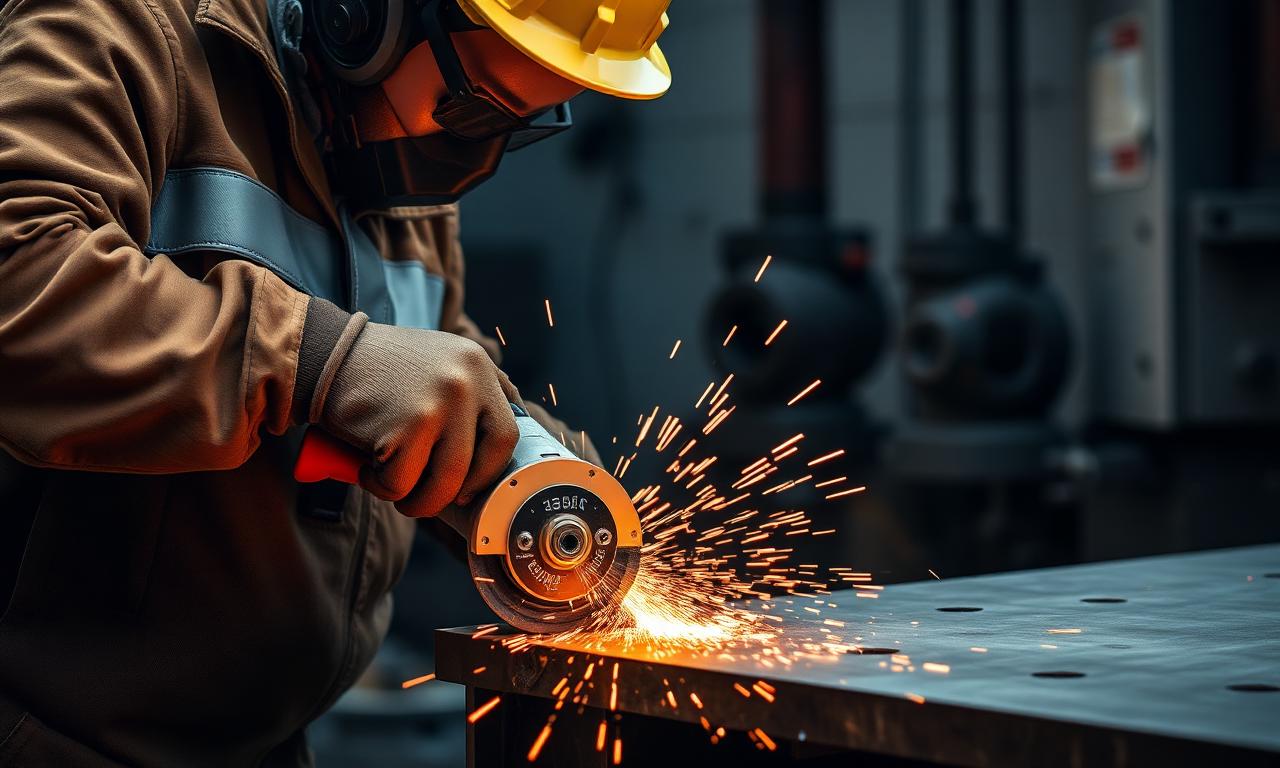
Every fabricator has an angle grinder. On 316, there are two rules that matter above everything else:
-
Use a stainless-specific abrasive wheel. Never use a wheel that has been used on carbon steel or cast iron. Cross-contamination embeds iron particles into the 316 surface, and those particles corrode. This is one of the most common causes of "316 rusting" complaints that aren't actually a material problem.
-
Dedicated tools for stainless only. Mark your grinders, mark your flap discs, mark your cutting wheels. Color-coded if you have to. In my shop, orange handles = stainless only.
[Recommended Stainless-Only Abrasive Cutoff Wheels — Amazon Affiliate Link]
Method 8: Hacksaw
Best for: Manual work, no-power situations, occasional one-off cuts in the field.
Not ideal for: Production. Anything you'll need to do more than once.
Bi-metal hacksaw blades, 18–24 TPI for most 316 work. Heavy, consistent stroke with good downward pressure. The same rule as always: don't let the blade rub — cut with authority on the forward stroke.
Cutting oil on every stroke. This isn't optional on 316 — the galling tendency is real even at hacksaw speeds.
Method 9: Metal Shearing / Guillotine
Best for: Thin sheet (typically up to 14 gauge / 0.075") in straight lines. High-speed blanking.
Not ideal for: Anything over 3/16" in 316. Curved cuts. Any application where the sheared edge will be in direct corrosive service without cleanup.
Power shearing 316 sheet is fast and leaves no HAZ. But shear-cut edges have a zone of cold deformation — not the same as a heat-affected zone, but there's plastic deformation and some edge cracking risk at the very edge line. For most structural sheet applications this is irrelevant. For precision parts or corrosion-critical edges, a light deburr is standard.
Blade clearance: Set to approximately 5–8% of material thickness. Too tight and you get secondary fracture. Too loose and you get rollover/burr. 316 is less forgiving of improper clearance than mild steel.
Safety Considerations for All 316 Cutting Methods
I'm going to address safety once, covering all methods, because the hazards are real.
Stainless steel dust and fume. 316 contains chromium, nickel, and molybdenum. When cutting, grinding, or welding, hexavalent chromium (Cr(VI)) can be generated. Cr(VI) is a known human carcinogen. OSHA has a specific standard for Cr(VI) exposure (29 CFR 1910.1026). Local exhaust ventilation and appropriate respiratory protection (minimum N95, P100 for high-exposure grinding) are non-negotiable.
Fire. Stainless sparks ignite combustibles. Clean shop, no rags near cutting zones.
Cuts and chips. Stainless chips are sharp, springy, and end up everywhere. Cut-resistant gloves during material handling. Eye protection always.
Noise. High-speed cutting, especially grinding and plasma, easily exceeds 90 dB. Hearing protection.
Coolant handling. Used metalworking coolants can harbor bacteria (including Legionella in some cases). Maintain concentration, pH, and tramp oil levels. Change systems on schedule. Wash hands, don't breathe mist without protection.
How to Choose the Right Cutting Method for Your Job
Here's the decision framework I actually use:
| Job Requirement | Best Method |
|---|---|
| Raw bar stock cutoff | Bandsaw |
| Precision contour, complex profiles in sheet | Fiber laser (nitrogen) |
| Zero HAZ, critical corrosion edge | Waterjet |
| CNC precision turned/milled parts | CNC lathe / mill |
| Fast rough plate cutoff, will be machined | Plasma or bandsaw |
| Thin sheet, straight blanks | Power shear or laser |
| Thick plate, extreme profiles | Waterjet or high-power laser |
| Field repair, no power | Angle grinder or hacksaw |
When in doubt: waterjet for corrosion-critical edges, laser for speed and economy on sheet, bandsaw for bar stock. Those three cover 95% of what comes through a typical 316 shop.
Common Mistakes When Cutting 316 (And How to Avoid Them)
After 25 years, here's the condensed list of mistakes I see repeatedly:
- Using oxygen assist on laser-cut 316. Kills corrosion resistance at the edge. Use nitrogen.
- Running bandsaw too fast. Cuts blade life in half, minimum.
- Letting tools dwell mid-cut. Creates work-hardened surface. Machine restarts fight a harder material.
- Cross-contaminating with carbon steel tools. Iron particles embed and rust. Dedicated tooling.
- Skipping coolant. 316 without coolant is a tool life disaster.
- Using wrong TPI on bandsaw. Under 3 teeth in cut = tooth strippage. Over 6 teeth in cut = chip packing.
- Not passivating plasma-cut parts in service. The HAZ corrodes. Clean it up.
- Using light feed / low chip load. Counter-intuitive but rubbing causes more heat and work hardening than cutting.
- Not breaking in new bandsaw blades. First cuts at half feed, always.
- Ignoring Cr(VI) fume on grinding/plasma ops. This is a real health hazard. Ventilate.
The Bottom Line
316 stainless rewards preparation. Pick the right method for the job — don't use a plasma torch on a part that needs a waterjet edge, don't run a bandsaw at carbon steel speeds, don't machine without coolant. Know your material, know your process, and respect the work-hardening clock.
For detailed parameters on any specific method, see:
- Condensed 316 Cutting Guide — Speeds, Feeds & Blade Picks
- Best Carbide Tools for 316 SS — 2026 Buyer's Guide
- 316 vs 304 Stainless: Machinist's Comparison
- Speeds & Feeds Calculator
📥 Free Download: The Complete 316 Cutting Reference PDF Every method, parameter, and troubleshooting tip from this guide — formatted as a print-ready shop reference. Enter your email below.
[Email signup form — lead magnet CTA]
Affiliate · Tested in shop
Shop Our Top Tool Picks for 316 Stainless →
Bandsaw blades, carbide end mills, cobalt drills, tapping fluids and coolants that actually survive 316.
See recommended tools