Reviews
Best Carbide Tools for 316 Stainless Steel (2026 Buyer's Guide)
By Cut316 Shop Team · 5/21/2026 · 14 min read
Best Carbide Tools for 316 Stainless Steel (2026 Buyer's Guide)
Tooling is the single biggest variable in 316 stainless machining. Two machinists, same machine, same 316 workpiece — different tooling choices — and one of them is making chips while the other is replacing a broken end mill and re-facing the part. I've been on both sides of that equation over the years.
This guide covers what actually matters when you're buying carbide tooling for 316 work: substrate grades, coating types, geometry, brand comparisons, and the real-world parameters you need to get productive. We're not reviewing brochures — these are tools that have run in my shop or in shops I trust.
Why 316 Is Hard on Tooling (And What to Do About It)
Before the product recommendations, you need to understand the mechanisms that kill tools in 316. Everything else follows from this.
Built-up edge (BUE): 316's gummy, ductile chip wants to weld itself to the tool's cutting edge under the heat and pressure of machining. Once BUE starts, the tool is cutting with an irregular, work-hardened lump of stainless on the edge. Surface finish degrades, cutting forces spike, and the BUE eventually fractures and pulls carbide with it. This is the most common failure mode in 316 end milling.
Notch wear: At the depth-of-cut line, 316's work-hardened surface repeatedly contacts the same point on the flute. Over time this creates a notch. When the notch deepens enough, the flute fractures. You'll see this especially on long-reach operations.
Thermal softening of coating: Every coating has a maximum operating temperature. Exceed it and the coating oxidizes, loses hardness, and the substrate carbide underneath becomes vulnerable. Low thermal conductivity in 316 means more heat at the edge.
Abrasion: Carbide precipitates in the 316 microstructure act as micro-abrasives. This is less of a factor than in cast iron but it's real.
The right tool addresses all four simultaneously: geometry that shears cleanly (minimizing BUE), coating with high thermal resistance, sharp edge with appropriate prep, and substrate with good toughness.
Section 1: Coating Selection for 316 Stainless
This is the most important parameter to get right and the most commonly misunderstood.
AlCrN (Aluminum Chromium Nitride) — My Top Pick for 316
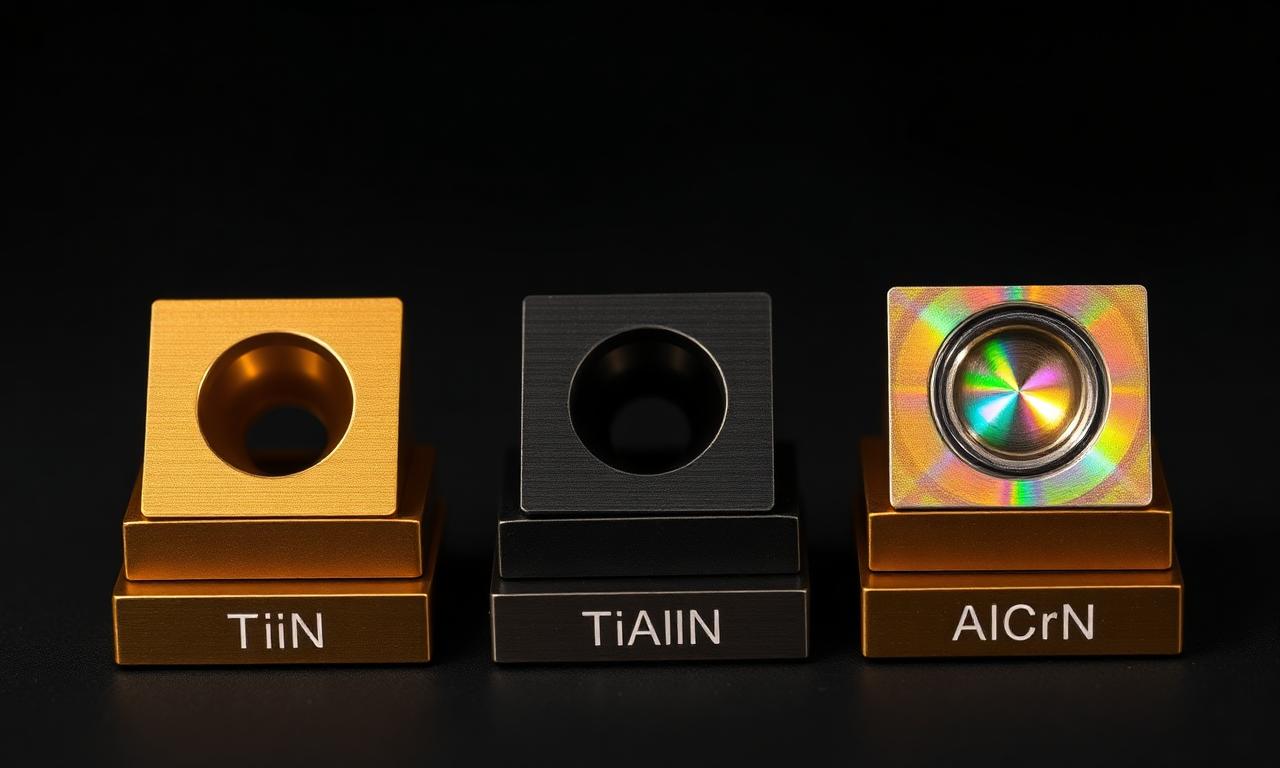
AlCrN has become the dominant coating for stainless work over the past several years, and for good reason. Its oxidation temperature is approximately 2100°F (1150°C) — significantly higher than TiAlN's ~1650°F (900°C). In a material that concentrates heat at the tool tip the way 316 does, that extra thermal headroom is genuinely meaningful.
The coating's hardness (~3200 HV) combined with its resistance to the adhesive wear mechanism (the same mechanism that causes BUE) makes it well-suited for austenitic stainless. The coefficient of friction between AlCrN and stainless steel is lower than TiN or TiCN, which helps chips flow off the face rather than sticking.
Best application for AlCrN: General milling, high-SFM finishing, any operation where heat buildup is the primary concern.
TiAlN (Titanium Aluminum Nitride) — Still Solid, Widely Available
TiAlN has been the workhorse stainless coating for decades and is still perfectly viable. Oxidation temperature ~1650°F, hardness ~3100–3300 HV depending on Al:Ti ratio. High Al-content TiAlN (sometimes marketed as AlTiN, where the formulation tips past 50% Al) behaves more like AlCrN and is an excellent choice.
The main reason I reach for AlCrN over standard TiAlN on 316 specifically: 316 runs hot and the extra oxidation resistance of AlCrN provides a real margin on tool life. On a job where I'm running flood coolant and moderate SFM, TiAlN is fine. On a finish pass at 450 SFM with HPC, AlCrN holds up noticeably better.
Best application for TiAlN: General-purpose work, operations with robust coolant management, shops where AlCrN-coated tools aren't readily available.
TiN (Titanium Nitride) — Not for 316 Production
TiN is the original PVD coating — bright gold color, widely used on general-purpose tools. Oxidation temperature around 1100°F. In 316 production work, TiN underperforms. Fine for occasional one-off cuts; not what you want when you're running 30 parts.
nACo / nACRo (Nano-composite Coatings) — High Performance, Higher Cost
Nano-composite coatings like nACo (Oerlikon Balzers), FIRE (Gühring), or FUTURA NANO (Walter) use alternating nano-layers to achieve hardness values of 3800–4500 HV with very high oxidation resistance. These outperform standard AlCrN on 316 in high-temperature, high-SFM operations. The cost premium is real — expect to pay 40–80% more than a standard AlCrN tool. Justified on high-production 316 work; hard to justify for a shop doing occasional 316 jobs.
Diamond (CVD/PCD) — Not For 316
CVD diamond coatings are for non-ferrous and non-metallic materials. Diamond reacts with ferrous metals at cutting temperatures — the carbon migrates into the iron lattice and the coating essentially dissolves. Never use diamond-coated tools on stainless steel.
Section 2: Best End Mills for 316 Stainless
Gühring RF 100 Stainless / Diver Series — Top Overall Pick
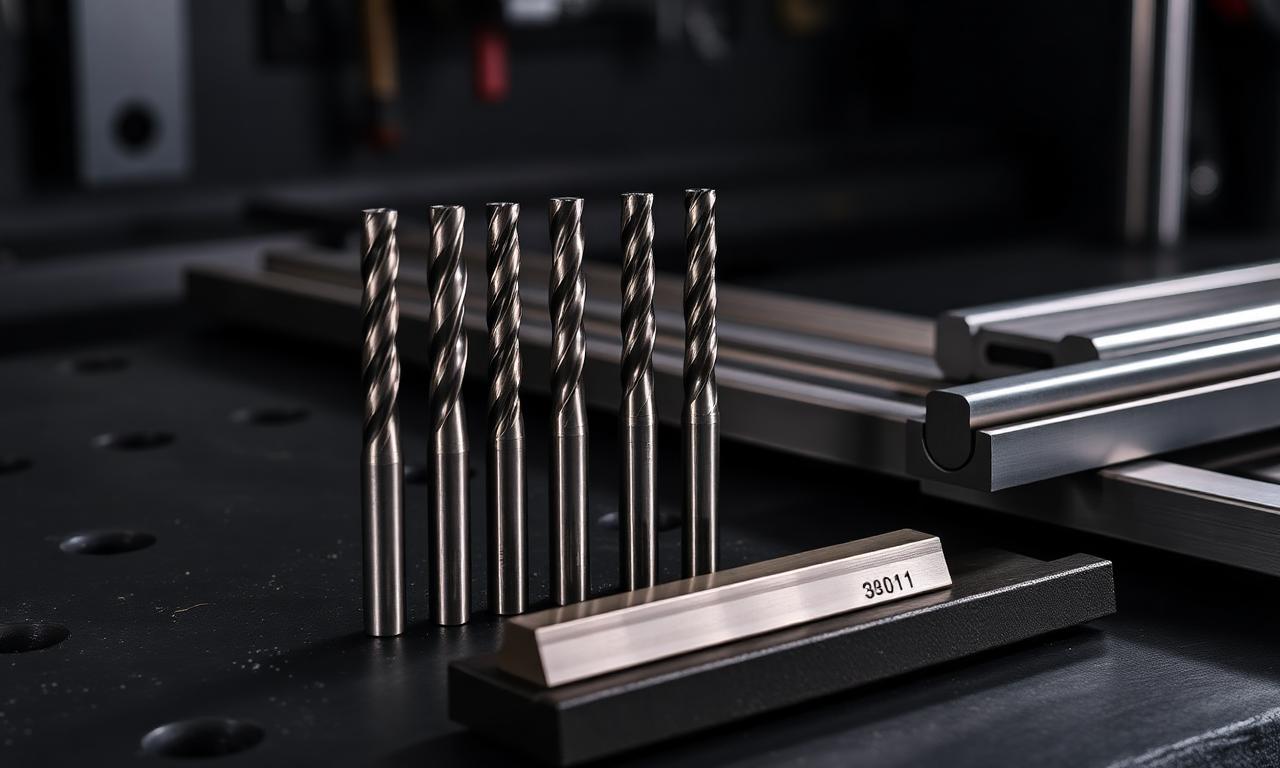
Gühring has been making carbide end mills specifically for stainless for a long time. The RF 100 Stainless line is engineered specifically for austenitic stainless — positive cutting geometry, 38° helix, AlCrN coating standard on most sizes, and a substrate grade with good toughness-to-hardness balance.
What we found in the shop: These tools run well at 220–250 SFM in 316 with flood coolant. BUE is minimal with proper chip load. Tool life on a typical 316 pocket operation (AlTiN-coated aluminum dies, Haas VF-4) ran about 20–25% longer than a comparable generic end mill from a catalog house. Not the cheapest tool — but the per-part cost when you account for tool changes and scrap rates is favorable.
Best for: General 316 milling, roughing and finishing, production environments.
[Gühring AlCrN End Mill for Stainless — Amazon Affiliate Link]
Mitsubishi Materials SMART MIRACLE Series
Mitsubishi's SMART MIRACLE end mills use their proprietary TH coating (a high-Al AlCrN variant) with a micro-grain carbide substrate. The geometry is aggressive — designed to cut, not rub — with sharp cutting edges and a smooth flute surface treatment that reduces chip adhesion.
What we found: Excellent chip evacuation on 316. The smooth flute surface does seem to reduce BUE tendency compared to rougher-surfaced tools at the same SFM. Where these shine is in deep pocket work where chip evacuation is the limiting factor. Slightly more expensive than Gühring, comparable tool life on 316.
Best for: Deep pockets, slotting, operations where chip evacuation is critical.
Kyocera Micro Solid End Mills (Small Diameter Work)
For small diameter work — 1/8" and under — Kyocera has been my go-to for years. Their micro-grain carbide substrate is excellent for small diameters where toughness is critical, and their coating options for stainless are solid. The grinding quality on Kyocera micro tools is consistently good; runout matters enormously at small diameters and these hold up well.
Best for: 1/8" and under work in 316, medical device machining, precision small parts.
Harvey Tool Specialty End Mills — Specific Geometry Options
Harvey Tool doesn't make the highest-performance tools in terms of raw coating technology, but their specialty geometry catalog is exceptional. For specific situations — undercutting, lollipop cutters, high-helix options, reduced-neck tools — Harvey has geometry options that larger brands don't offer in AlCrN coating. Worth keeping in the catalog for situations where geometry solves a problem that coating alone can't.
[Harvey Tool Stainless End Mill Selection — Amazon Affiliate Link]
YG-1 TIGE Series — Budget Performance
For shops that can't justify premium pricing on every tool, YG-1's stainless-specific end mill series offers an honest value proposition. AlTiN coating, geometry optimized for austenitic stainless, consistent quality control. Tool life is roughly 70–80% of a Gühring equivalent in our testing. At 50–60% of the price, the per-part cost often comes out favorably.
Best for: Lower-production shops, job shops running occasional 316, first-run programming where you expect to break tools tuning in parameters.
Section 3: Best Carbide Drills for 316 Stainless
Drilling 316 wrong is how you break tools, work-harden holes, and scrap parts. The drill selection and geometry matter as much as the end mill for milling.
Key Geometry Requirements for 316 Drilling
- Split point, 135°–140° included angle. Reduces thrust force, prevents walking, starts cutting immediately without center drilling in most cases.
- Parabolic flute. Improves chip evacuation in deep holes. Critical for anything over 3×D.
- Bright or coated. AlTiN or AlCrN coating for production use. Bright (uncoated) cobalt for manual drill press work where you're changing tools often.
- Positive cutting geometry at the chisel. Reduces the burnishing action at center that contributes to work hardening.
Gühring Ratio Drill — Best Overall Solid Carbide
The Gühring Ratio drill in TiAlN or AlCrN coating is the drill I specify for production 316 drilling operations. Split point, parabolic flute, point geometry designed for stainless. Runs at 80–100 SFM on a CNC with through-coolant at proper feed (0.004–0.008" IPR depending on diameter). Hole quality is excellent — minimal bell-mouth, good cylindricity, surface finish that doesn't require boring unless tolerance is very tight.
Mitsubishi MWS Series (Indexable Drill) — For Larger Diameters
For holes over 3/4" diameter, indexable drills are often more economical than solid carbide. Mitsubishi's MWS series with stainless-appropriate insert grades (MC6025 or equivalent) runs well in 316 at 150–220 SFM. The key is using the correct insert grade — stainless-optimized, positive rake, sharp edge prep. Don't use an insert spec'd for carbon steel.
Kennametal KSEM Plus — Production Option
For high-production drilling, Kennametal's KSEM Plus modular drill system offers excellent economics. The drill body is reusable; only the cutting head (carbide) is replaced. In 316, run with their grade KC7310 heads (PVD TiAlN, geometry designed for stainless). Tool management cost per hole drops significantly versus solid carbide replacement on long runs.
[Cobalt Stainless Steel Drill Set for Shop/Manual Work — Amazon Affiliate Link]
Speeds and Feeds Summary — Carbide Drills in 316
| Drill Diameter | SFM (Solid Carbide) | Feed IPR | Coolant | Peck Depth |
|---|---|---|---|---|
| Under 1/8" | 100–130 | 0.001–0.002 | Flood or through | Full peck every 1.5×D |
| 1/8"–1/4" | 90–120 | 0.002–0.004 | Flood or through | Peck every 2×D |
| 1/4"–1/2" | 80–110 | 0.004–0.007 | Through-coolant preferred | Peck every 2.5×D |
| 1/2"–1" | 75–100 | 0.006–0.010 | Through-coolant | Peck every 2×D |
| Over 1" | 65–90 | 0.008–0.013 | Through-coolant | Peck every 1.5×D |
On peck drilling: Use a full retract peck cycle for 316, not just a chip-break peck. The goal is complete chip evacuation from the hole. Partial retract chip-break cycles leave chips in the hole that compact, create heat, and start work-hardening the bore.
Section 4: Best Carbide Inserts for 316 Stainless Turning
Insert selection for 316 turning comes down to three things: grade (substrate + coating), geometry (chipbreaker style and rake angle), and edge prep. All three matter.
What to Look for in an Insert Grade for 316
Substrate: Fine or ultra-fine grain carbide. Coarser grain = tougher but lower hot hardness. For 316 finishing, fine grain holds the sharp edge longer.
Coating: PVD coating preferred for turning inserts. CVD coating is thicker (1.5× typically) and requires a heavier edge hone to stabilize the interface — that hone increases cutting forces and BUE tendency on austenitic stainless. PVD coatings can be applied to a sharper edge geometry, which is what 316 needs.
Geometry: Positive rake. Steep rake angle (10°–15°) reduces cutting forces, reduces BUE tendency. Sharp edge — T-land no heavier than 0.002"–0.003". Chipbreaker designed for long, stringy stainless chips (not a cast iron chip groove).
Kyocera PR1535 — My Everyday Roughing Insert
PR1535 is a PVD TiAlN-coated grade with a nano-crystalline structure that gives it good wear resistance and edge stability in 316. Positive-rake chipbreaker geometries (EM, GQ, MU) are available and work well for roughing and semi-finishing 316. I've run a lot of PR1535 on bar turned to the Mazak and it's a consistent performer — not the flashiest spec sheet but reliable in the real world.
Recommended geometry: CNMG 432 or CNMG 433 in GQ chipbreaker for roughing, MP for finishing.
Mitsubishi MC6025 — Best Overall for High-Speed 316 Turning
MC6025 is Mitsubishi's go-to stainless grade — PVD coated, fine grain substrate, sharp edge tolerances. Where this grade outperforms in 316 is at higher SFM finishing work. At 400–500 SFM for finish turning, MC6025 holds edge geometry longer than most competitors. The coating adhesion is excellent; flaking failure at the depth-of-cut notch position is less common than on some other grades.
Recommended geometry: CCMT or DCMT positive insert in the MP chipbreaker for finishing. CNMG in the MU for roughing.
[Mitsubishi Carbide Inserts for Stainless — Amazon Affiliate Link]
Sandvik Coromant GC2220 / GC2215 — Finishing and Light Roughing
Sandvik's GC2220 is a fine-grain PVD-coated grade specifically developed for stainless turning. The Inveio coating technology (unidirectional crystal growth in the coating) gives it unusually consistent wear characteristics. If you're doing high-precision finishing on 316 where surface finish Ra is tightly controlled, GC2220 is hard to beat.
GC2215 is the tougher sibling — slightly less wear resistance but better fracture toughness, preferred for interrupted cuts or less-than-ideal setups.
Best for: Precision 316 finishing, medical device turning, parts with tight Ra requirements.
Tungaloy AH8015 — Threading on 316
Threading 316 is where I've burned through more insert grades than any other turning operation. The interrupted engagement, the high force per unit area, the galling tendency of 316 on thread form flanks — it all adds up. Tungaloy's AH8015 grade in their threading geometries has given the best thread form life in our shop compared to alternates we've tried. The PVD TiAlN with their proprietary finish on the rake face reduces BUE on the thread form.
Best for: Single-point threading in 316, thread milling with solid carbide.
Insert Speeds and Feeds for 316 Turning
| Operation | SFM | Feed (IPR) | DOC |
|---|---|---|---|
| Roughing (PR1535/MC6025) | 200–300 | 0.010–0.016" | 0.080–0.150" |
| Semi-finish | 280–380 | 0.006–0.010" | 0.030–0.060" |
| Finishing (GC2220) | 350–500 | 0.004–0.007" | 0.010–0.025" |
| Threading | 150–200 | Per pitch | — |
| Grooving / Parting | 150–220 | 0.002–0.005" | — |
| Boring (finishing) | 350–450 | 0.003–0.006" | 0.010–0.020" |
Coolant note: High-pressure coolant at the insert rake face changes the numbers on 316. With HPC (500–1000 PSI at the insert), you can run finishing SFM 30–50% higher than the values above. If your lathe has HPC capability and you're running significant 316 volume, use it.
Section 5: Solid Carbide vs. Indexable — When to Use Each
The answer isn't always "solid carbide is better." It depends on diameter, volume, and operation type.
Use Solid Carbide When:
- Diameter is under 3/4"–1" (below this, indexable insert quality degrades and solid carbide shines)
- Tight tolerances require the tightest possible runout
- Complex geometries (undercutting, ball nose, specialty profiles) aren't available in indexable
- You're drilling holes where insert-based drills can't maintain tolerances
Use Indexable When:
- Diameter is over 3/4"–1" for mills, over 3/4" for drills
- Production volume justifies the body investment
- Machine is large enough for rigidity at larger DOCs
- Per-part tooling cost is being tracked closely
For 316 specifically: solid carbide dominates under 1" because the geometry flexibility and consistency matter. Over 1" in turning, almost always indexable. In milling over 1": shell mills with appropriate stainless inserts, or solid carbide for tight tolerance work.
Section 6: Tapping Tools for 316 Stainless
Tapping is where 316 claims more tools per month in my shop than any other operation. The galling tendency of 316 turns tapping from routine to challenging.
Tap Specifications
- Spiral flute tap for through holes (chips evacuated upward)
- Spiral point tap for CNC through-hole tapping at higher speeds
- Bottoming chamfer only when truly necessary — taper chamfer is kinder to 316
- PM-HSS or cobalt (M42) minimum. Solid carbide for production CNC tapping.
- TiCN coating is the traditional stainless tapping coating. AlCrN also works well.
- Tap drill size: 75% thread engagement is adequate. Don't fight for full thread in 316.
Recommended Brands for 316 Tapping
Emuge (Franken brand): The gold standard for 316 tapping in my shop. The Form-A Tap (roll tapping / thread forming) works exceptionally well in 316 — no chips produced, work-hardened surface actually improves thread strength, and life is dramatically longer than cut taps. Requires a pre-drilled hole to the correct form-tap drill size. Not suitable for blind holes with no chip space.
OSG EX-SUS Series: Specifically engineered for stainless. Good life, reliable. Widely available through distribution.
Gühring Spiral Flute Stainless Taps: Solid performers. The geometry is optimized for austenitic grades.
[Emuge Spiral Flute Tap for Stainless — Amazon Affiliate Link]
Tooling Summary: Quick Reference
| Operation | First Choice | Second Choice | Coating | SFM |
|---|---|---|---|---|
| 316 End Milling (general) | Gühring RF 100 Stainless | YG-1 TIGE | AlCrN | 200–250 |
| 316 End Milling (finish) | Mitsubishi SMART MIRACLE | Gühring RF 100 | AlCrN or nACo | 240–300 |
| 316 Drilling (CNC) | Gühring Ratio | Kennametal KSEM Plus | AlCrN/TiAlN | 80–120 |
| 316 Roughing Turn | Kyocera PR1535 | Mitsubishi MC6025 | PVD TiAlN | 200–300 |
| 316 Finish Turn | Mitsubishi MC6025 | Sandvik GC2220 | PVD TiAlN/AlCrN | 350–500 |
| 316 Threading (turn) | Tungaloy AH8015 | Mitsubishi MC6025 | PVD | 150–200 |
| 316 Tapping (CNC) | Emuge Form-A | OSG EX-SUS | TiCN | 20–40 SFM |
The Bottom Line on Tooling for 316
Budget tooling costs you money in 316. The difference between a purpose-built AlCrN end mill and a general-purpose TiN tool isn't just tool life — it's surface finish, work-hardening incidents, scrapped parts, and machine time. In our shop, upgrading to proper stainless-specific tooling across all operations reduced total tooling cost per part significantly because the failure rate and part rejection rate dropped.
Don't cheap out on the coating. Don't run worn tools. Don't ignore geometry. Those three decisions determine more of your 316 machining outcome than almost anything else.
For the full parameters and cutting method guides, see:
- Condensed 316 Cutting Guide — Speeds, Feeds & Blade Picks
- Ultimate Guide to Cutting 316 Stainless Steel
- 316 vs 304 Stainless: Machinist's Comparison
- Speeds & Feeds Calculator
📥 Free Download: 316 Stainless Tooling & Speeds Reference PDF All parameters from this guide in a single-page print-ready format. Insert grades, end mill specs, drill speeds, tapping rules — everything on one sheet. Enter your email below.
[Email signup form — lead magnet CTA]
Affiliate · Tested in shop
Shop Our Top Tool Picks for 316 Stainless →
Bandsaw blades, carbide end mills, cobalt drills, tapping fluids and coolants that actually survive 316.
See recommended tools